Lugares Places
Ruinas que aún hablan Ruins that still speak
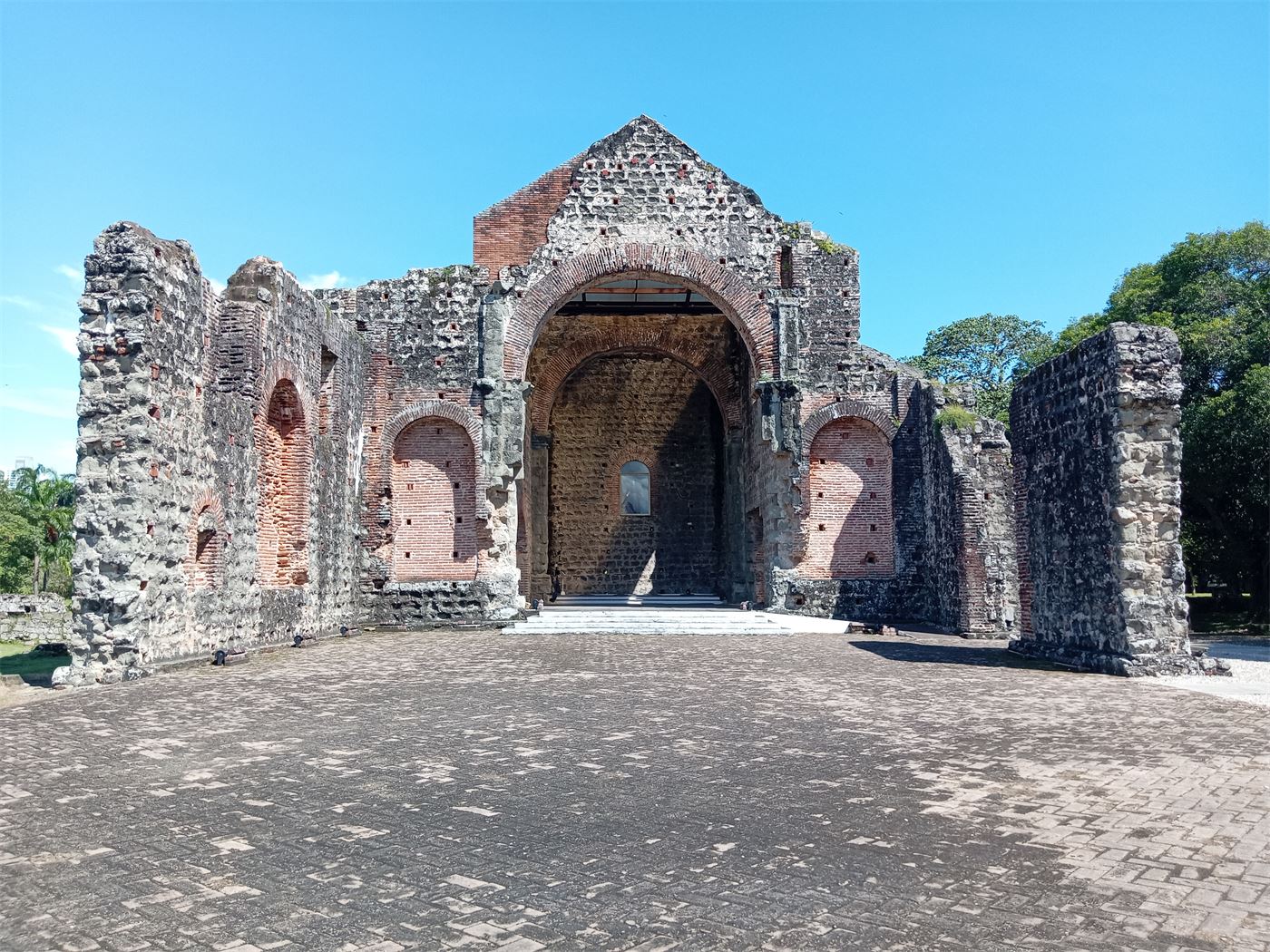
Caminar por el conjunto monumental de Panamá Viejo es caminar por una ciudad que se detuvo en 1671. No hay techos ni puertas: hay muros de piedra, arcos que enmarcan el cielo y el trazado de calles que todavía se deja leer bajo la hierba. Walking through the monumental site of Panama Viejo is walking through a city that stopped in 1671. There are no roofs or doors: there are stone walls, arches framing the sky, and a street grid you can still read beneath the grass.
Las ruinas de sus iglesias y conventos son las que más hablan. Frente a un arco que ha resistido más de tres siglos de lluvias, terremotos y salitre, es inevitable preguntarse cuántas manos levantaron esa piedra y cuántas historias pasaron debajo de ella. The ruins of its churches and convents are the ones that speak loudest. Standing before an arch that has withstood more than three centuries of rain, earthquakes, and salt air, you can't help wondering how many hands raised that stone and how many stories passed beneath it.
Es un lugar para ir sin prisa, temprano o al final de la tarde, cuando la luz es baja y el ruido de la ciudad moderna queda lejos. Panamá Viejo no se visita: se escucha. Y lo que dice — que lo esencial resiste — nos parece una buena lección de diseño. It's a place to visit unhurried, early or late in the day, when the light is low and the noise of the modern city feels far away. You don't tour Panama Viejo: you listen to it. And what it says — that the essential endures — strikes us as a good design lesson.